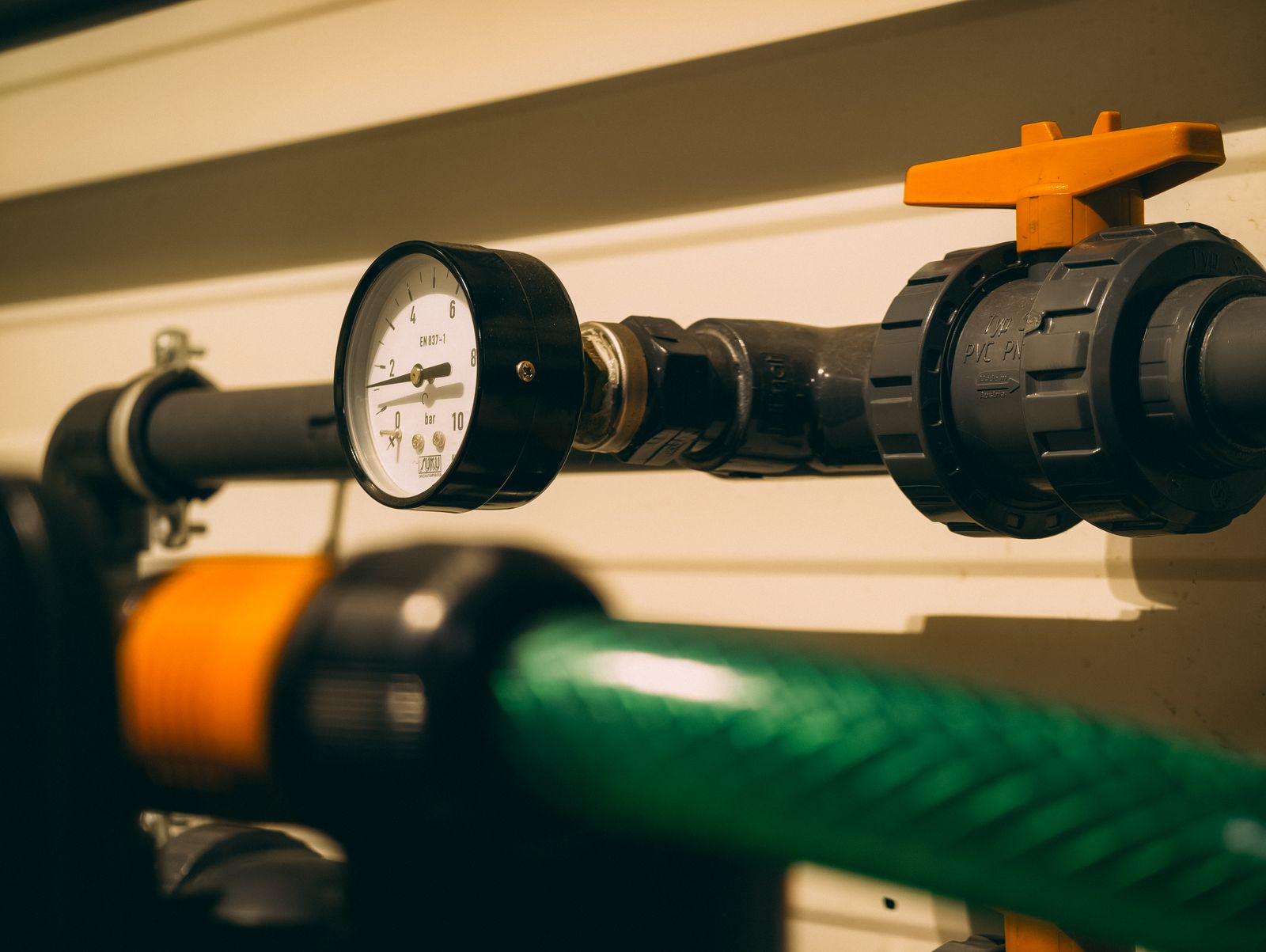
Low pressure is easy to live with at first and then very annoying. Rinsing shampoo takes patience and two people cannot run water at once. Because it builds slowly, many households put up with it for years before asking what is behind it.
The cause is not always the pipe under the yard. It can be a valve that is not fully open, a regulator near the house, something on the provider side of the meter, or a line that has narrowed or was never large enough. Guessing wrong means paying to dig up the wrong thing.
We connect you with an experienced local main water line pro who tests before recommending anything, explains the findings in plain language, and gives upfront pricing before work begins.
Every tap, or just one?
Start by working out how widespread the problem is. If only one faucet or one shower is weak, the trouble is almost always local to that fixture: a clogged aerator, a worn cartridge, a partly closed stop valve underneath. Those are indoor matters, and the technician will tell you plainly if that is what they find.
If the weakness shows up everywhere, and especially on the lowest tap in the house, the cause sits upstream of all of them. That means the main line, the main valve, a regulator, or something on the provider side. Hot water and cold water both weak points the same way, while hot only suggests a different story entirely.
 Main water line work
How an old or undersized line throttles the flow
Water through a pipe behaves a bit like traffic through a lane closure. If the opening is smaller than it should be, everything backs up, and the house gets less than the street delivers. A service line can end up restricted in two ways.
The first is corrosion. Older steel and galvanized lines build up rough deposits on the inside, narrowing the bore over many years. Our page on old galvanized and lead-era lines explains how to look for that kind of pipe where it enters your house.
The second is size. A line sized for a small older house may struggle once the family has grown, bathrooms have been added, or the demands of the property have changed.
What the technician rules out before blaming the line
A good technician does not leap to excavation. There are several simpler explanations to eliminate first, and the answers often save you money.
- The main shut-off. A valve that is only partly open, or worn inside, can choke flow while looking normal. See our page on curb stop and shut-off valves.
- A pressure regulator. If your home has one, it usually sits near where the line enters the house, and it can drift or fail.
- The meter and the provider side. If the restriction is before the property line, your water provider is the one to contact, and the technician will tell you so.
- Plumbing inside the house. Old interior pipe can restrict flow independently of the buried line.
Each of those has a different fix and a different owner, which is why testing comes first.
How the diagnosis is done
The visit usually starts with a conversation: when you noticed the change, which fixtures are affected, and whether it varies by time of day. Then the technician looks at the meter, the shut-off and the point where the line enters the house, and measures the pressure at the connection point. Comparing static pressure with the pressure while water is running tells a story, because a restricted line loses much more under flow.
If the numbers point at the buried pipe, the next step is deciding how to confirm it, since a suspected leak can look similar. Our guide to underground leak detection explains how a pro locates trouble without turning the lawn over.
You get the findings in plain words, including what was ruled out and what was not, before any price is discussed.
Talk it through with someone who has seen this before.
When replacement is the real fix
If testing shows that the line itself is narrowed by corrosion or is simply too small for the house, no valve adjustment or add-on will correct it. That is the situation where replacement becomes the answer, and the technician will say so directly.
Replacing the private side of the line gives the house a new, clear path from the connection point to the wall. Details of the process, the options for the route, and what to ask beforehand are covered under main water line replacement. The outcome depends on the whole system, so ask the technician what to expect rather than assuming any specific improvement.
Pressure complaints in Hummelstown homes
In the borough around the square and Main Street, older 19th-century houses often have older galvanized supply pipe, and low pressure is a familiar complaint there. Our page for Hummelstown Borough describes the usual layout of those homes.
Out in the subdivisions of South Hanover Township, the runs from the street or meter to the house can be long, and the lots can slope. You can read more on the South Hanover Township page.
Elevation also plays a part in the whole area, since a house on a rise sees less pressure than one at the bottom of a slope. The technician can tell you whether what you are seeing is normal for your location or a sign of a problem.
When to call and what to say
Low pressure is rarely an emergency on its own. A sudden, dramatic drop is different, especially if you also see wet ground or hear water running when everything is off. In that case, call right away and go through the steps in the box below.
For a slower decline, call when it is convenient and be ready with three facts: how long you have noticed it, whether it is hot, cold or both, and whether neighbours seem affected. The last point is a useful hint about the provider side.