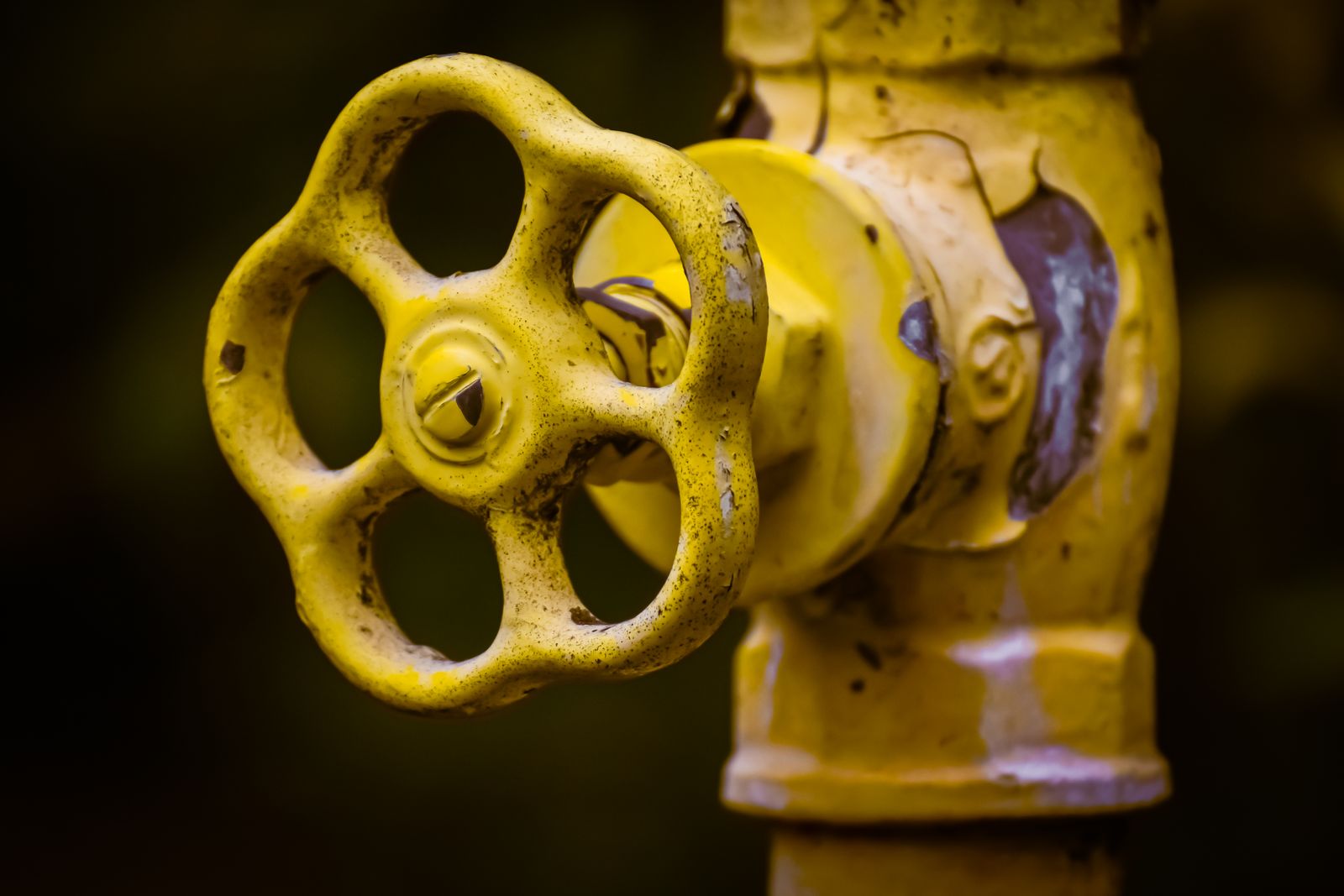
Most people never touch their main shut-off until something goes wrong. A pipe lets go in the basement, you grab the handle, and it will not turn. Or it turns a quarter-way and stops. Or it turns fully and the water barely slows.
Two valves matter on the main water line: the shut-off inside your home, and the curb stop out near the street or property line. They look nothing alike, they sit in very different places, and the people who deal with them are not always the same.
Two valves, two jobs: the main shut-off and the curb stop
The main shut-off is the valve inside the house, usually on the wall where the water line comes through the foundation, often in a basement, utility corner or crawl space. Closing it stops water to every fixture in the home. It is yours to operate, and it is the one you should know how to find before an emergency.
The curb stop is the valve buried out toward the street or property line, usually reached through a small cover set in the ground. Its job is to cut off the whole service line, including the stretch running under your yard. It is normally operated with a long-handled key, not by hand. Who owns and operates the curb stop usually depends on your water provider, so check with them before anyone works on it.
 Main water line work
How a shut-off valve seizes, weeps or simply stops sealing
Minerals build up inside, internal washers harden, and the stem packing that keeps water from creeping up the handle dries out. Older gate-style valves, the kind with a round wheel handle, are the usual suspects. They can get stuck partly open or partly closed, and the internal gate can break away from the stem so the handle spins without doing anything.
Common signs of a tired valve:
- The handle is stiff, gritty or will not move at all.
- There is a damp spot, drip or green-white crust around the stem.
- The valve turns easily but water keeps flowing.
- The valve is closed and a faucet still runs at a trickle.
If you see any of these, avoid the temptation to lean on a wrench. A technician can sometimes loosen a stiff valve, but one that has gone this far is often better replaced.
Replacing the main shut-off inside the house
Swapping the interior shut-off is a defined job with a clear order of work. Because the valve you would normally use to stop the water is the one being replaced, the technician has to stop the supply further upstream, which is where the curb stop comes in. If the curb stop is also stuck, that comes first and may mean involving your provider.
Once the supply is off, the old valve is cut out and a new one is fitted and tested under pressure. Many homes today get a ball-style valve with a short lever handle. Ask the technician which type they are fitting and why. If the pipe beside the valve is worn, that is where a conversation about replacing the main water line may begin.
Talk it through with someone who has seen this before.
Curb stop trouble and why it is often a shared job
Curb stops fail in their own ways. The cover gets buried under sod or mulch and nobody can find it. The stem rusts and snaps. The valve sits at an angle after years of ground movement and will not turn fully. Because the curb stop sits at or near the dividing point between the public and private sides of the service, repairs here are often coordinated with your water provider instead of done on your own.
What the technician can usually do is confirm the valve is the problem, work out whether the issue is on the private side, and tell you plainly who needs to be contacted for the rest. Requirements vary, and the technician explains what applies to your job. If a curb stop failure turns out to be one symptom of a damaged line, the next step is often a main water line repair rather than a valve swap on its own.
Why a working shut-off decides how bad a burst pipe gets
The difference between a few buckets and a ruined basement is often how quickly the water stops. With a shut-off that works, you close it and take your time. With one that does not, water keeps pouring while you call and look for the curb stop.
This matters most in cold weather. Cold winters stress pipes near where they enter the house, and the first sign of trouble can be a spray from a joint on a frosty morning. Test your valve once a year, gently. If it fights you, call instead of pushing harder.
Finding and testing the valves in an older Hummelstown house
In the older brick and frame homes around the square and along Main Street, the shut-off is often tucked behind stored boxes, a stair, or a partial wall in a basement that was added to over the years. The valve may be original or may have been moved when someone renovated. The pipe entering the house may be older galvanized, and the valve fitted to it can be just as tired.
Out in the subdivisions of South Hanover Township, the main shut-off tends to sit in a utility room or basement corner near the water heater, with a longer run between valve and street. Down in the canal-era village of Union Deposit, short runs and small lots mean the curb stop is often closer to the front steps than people expect.